Roll Materials
Roll Materials

Roll Materials
Roll Materials
Leveraging proprietary techniques of our own to satisfy any and all needs
Characteristics required for rolls vary from stand to stand among the different types our customers use. In order to satisfy individual demands, we manufacture rolls on a built-to-order basis and have now established an extensive track record of material development and manufacturing techniques.
he key to our success has been the great number of proprietary techniques we have developed, enabling us to provide support for such a diverse range of materials. Today we maintain an unbroken tradition of continuously striving for higher quality and tirelessly working to achieve further improvement.
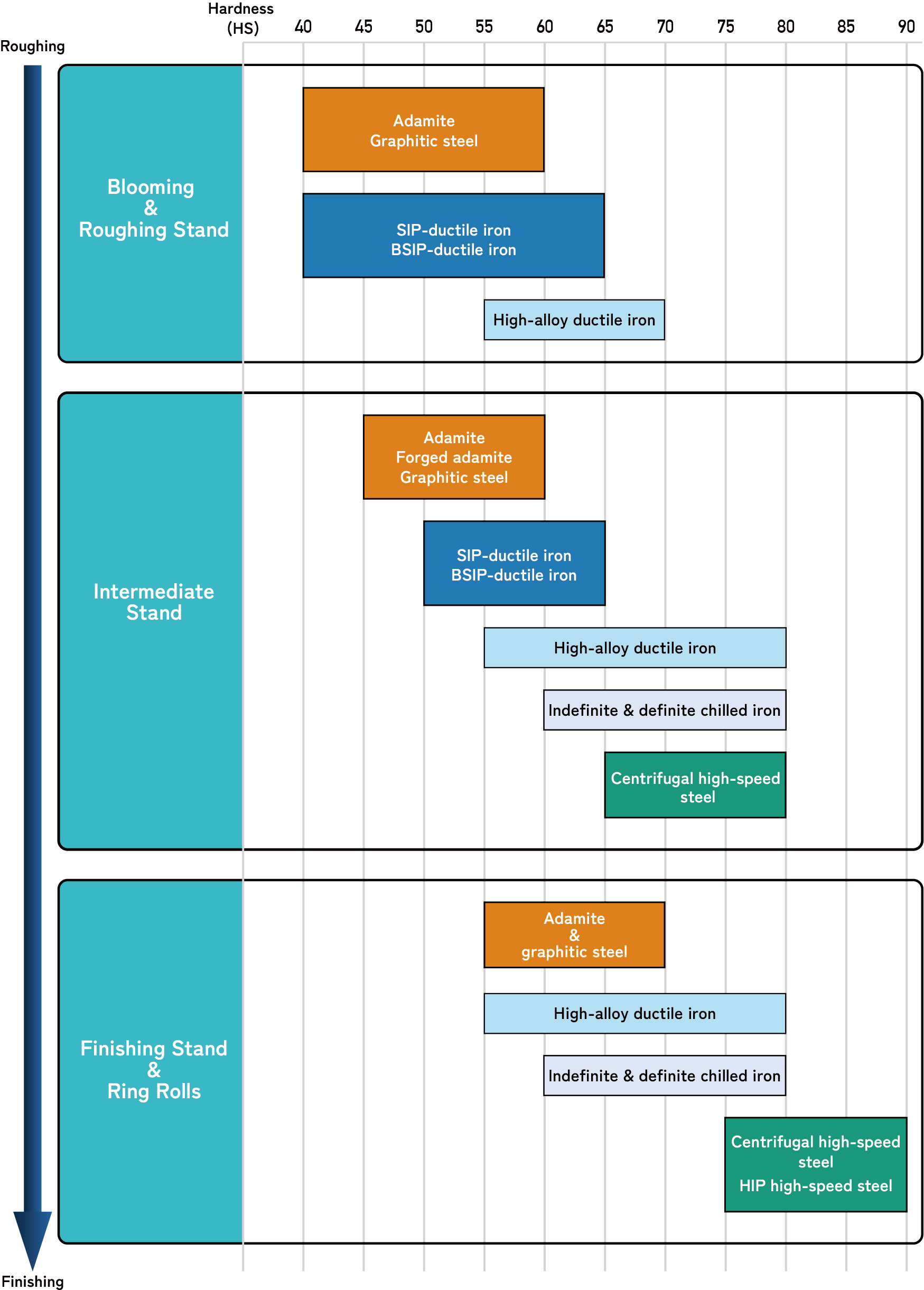
Examples of Appropriate Materials for Different Stands
Cast-Iron Based
SIP-ductile iron
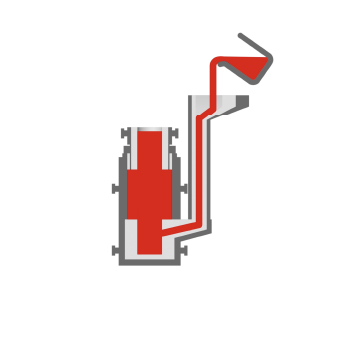
Casting: Static casting
Characteristics: Wear resistance, anti-roughness property, toughness, heat crack resistance
Hardness (HS) 40–60
Applying special proprietary heat treatment techniques of our own to spheroidal graphite cast iron, which offers high toughness, delivers further enhanced toughness, wear resistance, anti-roughness property, and heat crack resistance.
BSIP-ductile iron
Casting: Static casting
Characteristics: Wear resistance, anti-roughness property, toughness, heat crack resistance
Hardness (HS) 55–65
Applying special heat treatment to spheroidal graphite cast iron bainitizes the base structure of the metal to deliver enhanced wear resistance while maintaining its toughness.
High-alloy ductile iron
Casting: Static casting, centrifugal casting
Characteristics: Wear resistance, anti-roughness property
Hardness (HS) 55–80
Adjusting the microstructure of the metal by increasing the alloy content of the spheroidal graphite cast iron delivers fitting levels of wear resistance for specified operating conditions.
Indefinite & definite chilled iron
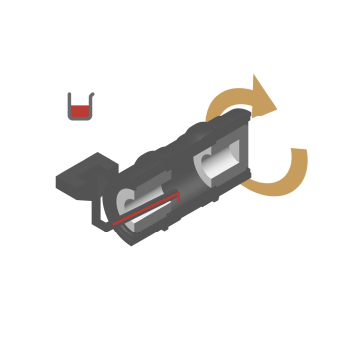
Casting: Centrifugal casting
Characteristics: Wear resistance, anti-roughness property
Hardness (HS) 60–80
One of the oldest materials, chilled iron comes in indefinite and definite forms, with the former featuring a structure containing flake graphite, while the latter is graphite-free. In addition to wear resistance, rolls with high hardness offer relatively high heat crack resistance.
Semi-Steel Type
Adamite
Casting: Static casting, centrifugal casting
Characteristics: Toughness, bite-in property
Hardness (HS) 40–70
A form of white pig iron with 1.2% to 2.4% carbon content, adamite is a material characteristically used for rolls. With little drop in hardness toward the inside, it offers wear resistance superior to cast steel, making it a good choice for blooming mill rolls, billeting mills, which require bite-in property, and rolls for steel bar and wire rod roughing stands.
Graphitic steel
(Graphite-precipitated adamite)
Casting: Static casting, centrifugal casting
Characteristics: Toughness, heat crack resistance
Hardness (HS) 40–70
A material made by precipitating granular graphite into adamite, offering enhanced heat crack resistance and seizure resistance. It is a good choice for roughly the same types of stands as adamite.
Forged adamite
Casting: Forged
Characteristics: Toughness, bite-in property
Hardness (HS) 40–60
Forging adamite material delivers increased toughness. It is used for high-load stands.
High-Speed Steel Type
Centrifugal high-speed steel
Casting: Centrifugal casting
Characteristics: Wear resistance, anti-roughness property
Hardness (HS) 65–85
High-speed steel is given high carbon content to precipitate hard carbide materials (MC, M₂C, and M₇C₃ types) into its microstructure to deliver greatly enhanced wear resistance and anti-roughness property.
HIP high-speed steel
Casting: HIP
Characteristics: Wear resistance, anti-roughness property
Hardness (HS) 85–95
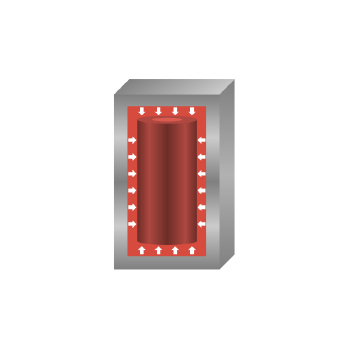
Developed as a roll material by leveraging powder metallurgy technologies, HIP high-speed steel contains carbides featuring microhardness, offering ultra-superior wear resistance and roughening resistance.
Product Material
Roll Material Development
Our objective: To continue satisfying the needs of our customers
Higher performance and diversification of customers’ rolled steel grades has brought demand for rolls with even higher quality and special characteristics than before.
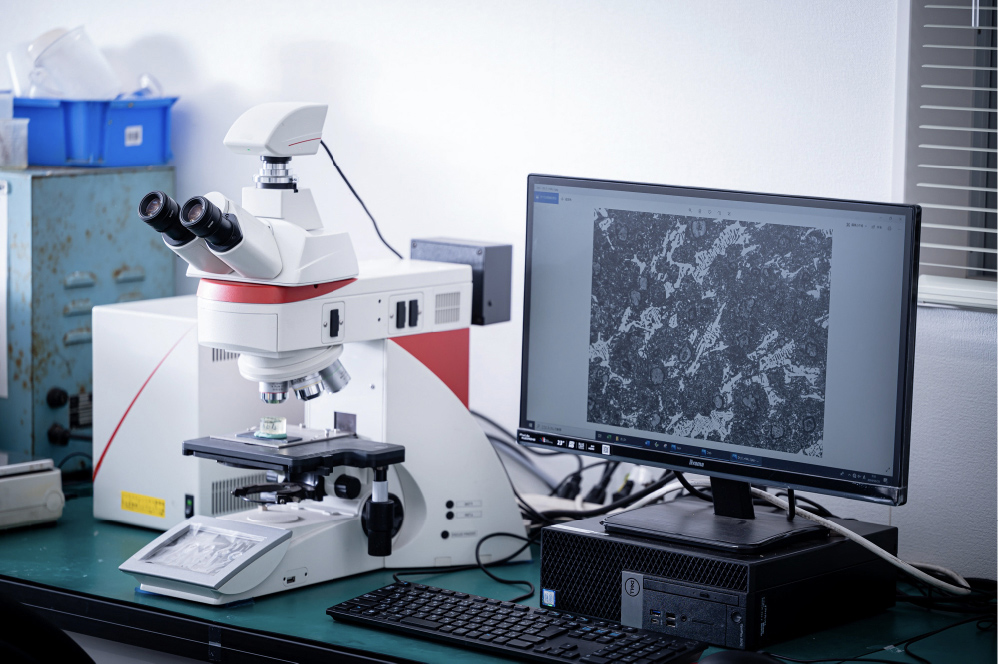
In order to meet customers’ ever-changing needs, we have introduced testing equipment capable of reproducing their rolling conditions. Building on our track record of satisfying diverse demands, we are still working today to develop new materials.
Equipment

High-temperature abrasion testing equipment
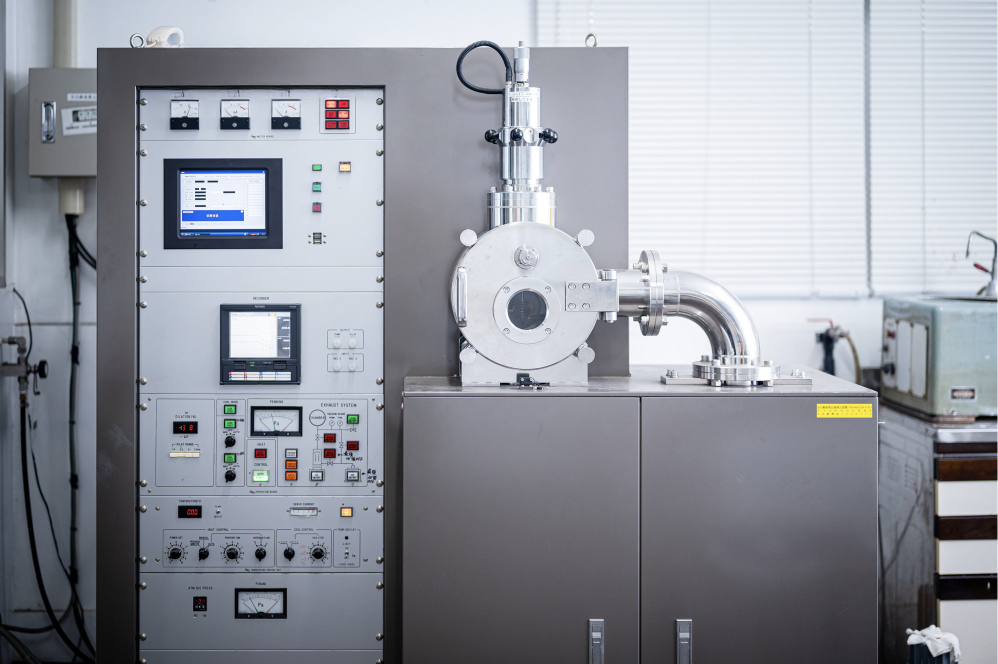
Fully automatic transformation point recording & measuring equipment
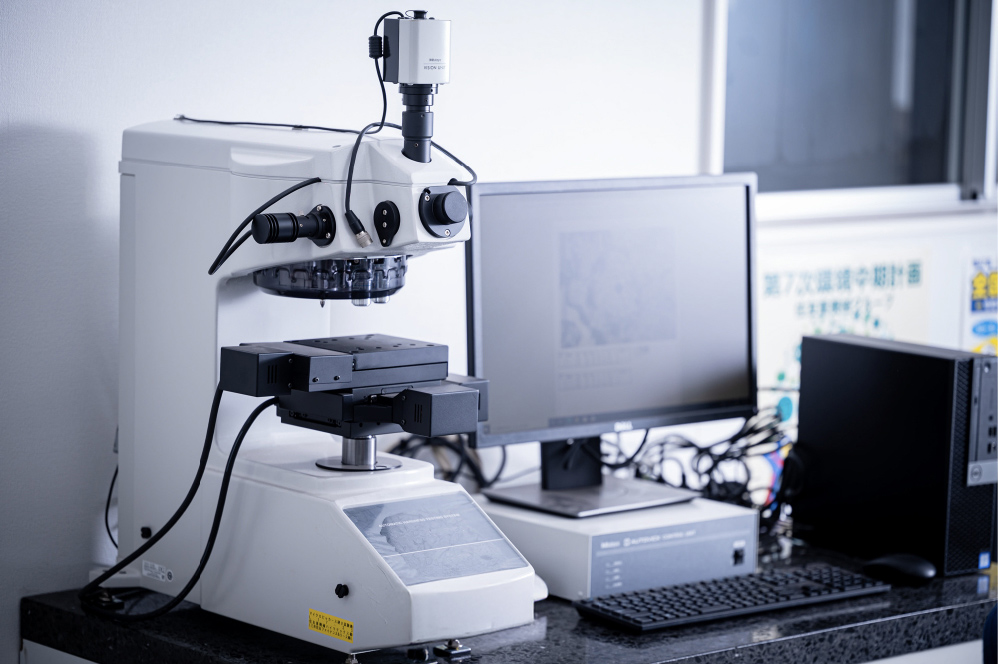
Micro Vickers hardness testing machine